

We’ve been on an adventure in the last couple of weeks at Biofach 2026—one of the world’s biggest organic food fairs in Europe—and we have one thing on our minds: Olive Oil.
We aren't talking about the bland, mass-produced oil sitting on the bottom shelf of the supermarket. We are talking about pure, vibrant, liquid gold.
If you've ever wondered why some olive oils just taste or behave better, it all comes down to four vital pillars. Here is what we learned from the tasting rooms, and how you can bring that expertise into your own kitchen.
The 4 Pillars of True Quality
1) The Soil & Environment
Great olive oil starts from the ground up. Rocky soil, dry climates, high altitudes, and coastal winds might sound like tough conditions, but these natural stress factors actually push the olive tree to produce a higher concentration of healthy phenols (antioxidants).
2) The Farmer’s Hands
Industrial farming is all about optimizing yield. Dedicated organic farmers optimize quality.
In family-owned groves, every tree is known. Decisions like careful pruning, controlled irrigation, harvesting the olives while they are still green, and rushing them straight to the mill are what protect both the aroma and the health benefits.
3) The Variety (Cultivar)
There are over 70 varieties of olives recorded in Greece alone! But remember: the variety just gives the potential. Climate, timing, and care determine the final result.
Two of the varieties that The Biofoods offer are:
- Koroneiki: Intense, peppery, and highly stable. Packed with phenolic potential.
- Tsounati: More delicate and elegantly complex, but can reach incredible phenolic levels under the right natural stress.
4) The Critical Moment: Extraction
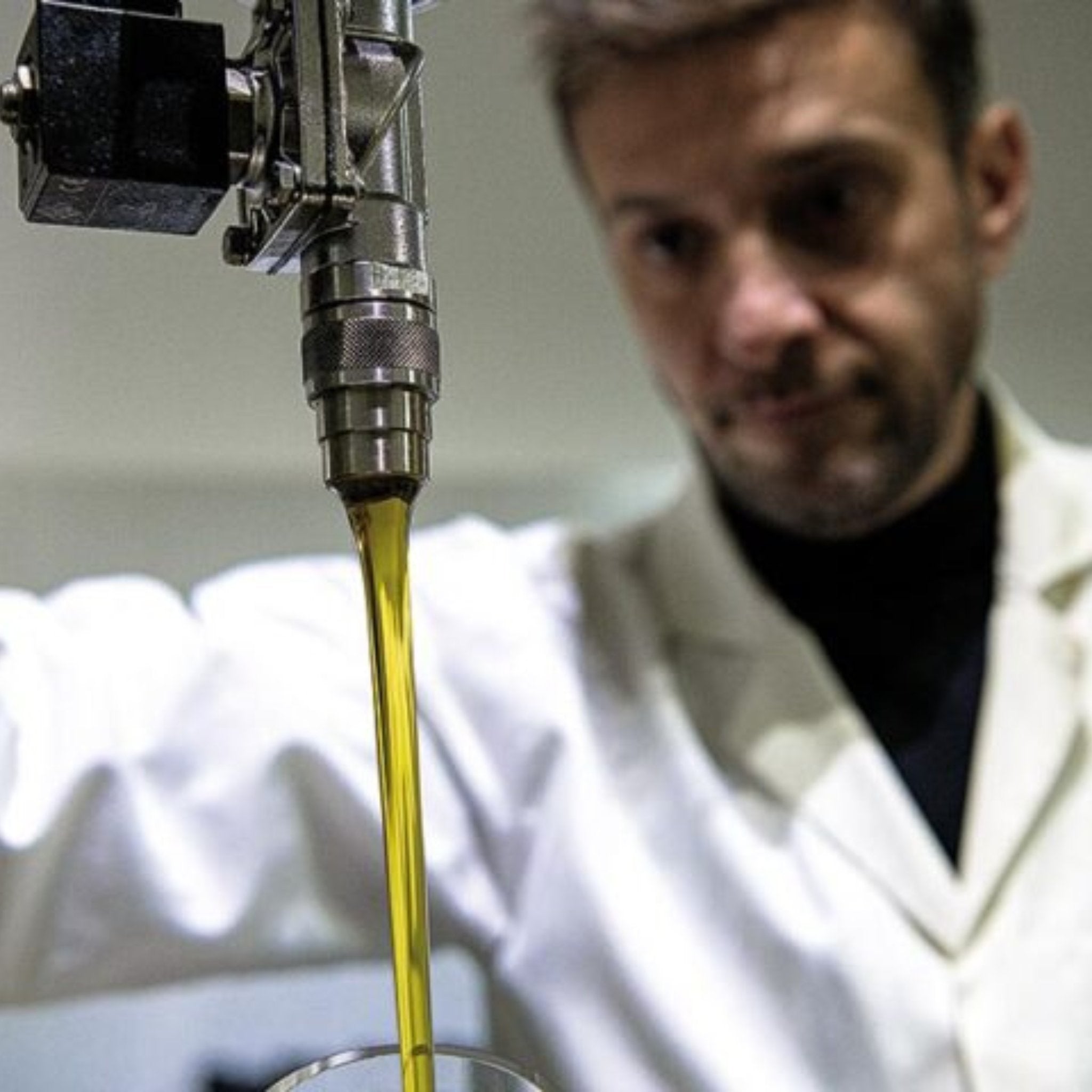
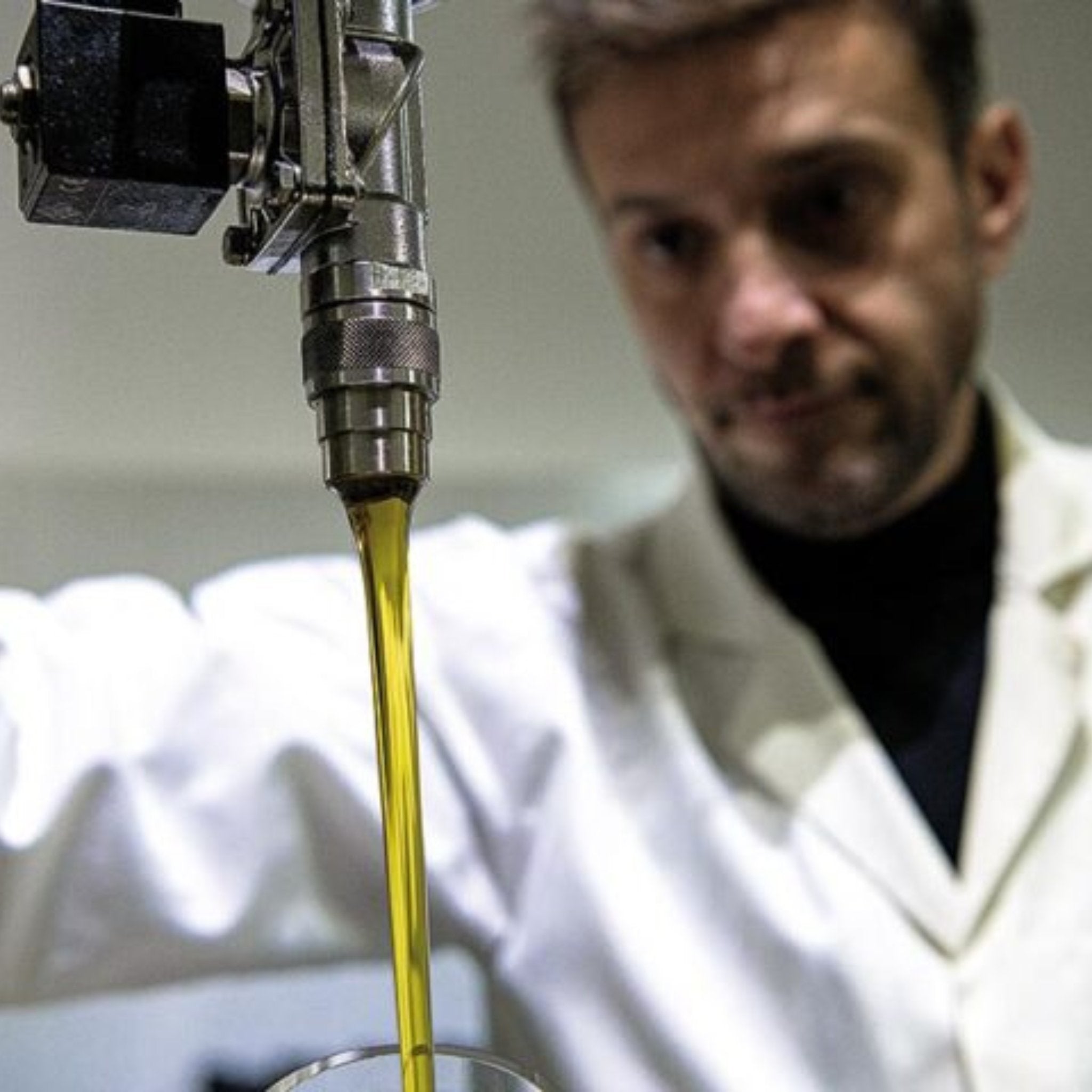
Even perfect olives can become average oil if the extraction is careless. Heat, oxygen exposure, and processing time matter enormously.
If the paste is overheated or delayed, those valuable health properties degrade. Once extracted, the oil must be protected from its worst enemies—light, heat, and oxygen—using stainless steel tanks and dark glass bottles.
Making Sense of the Senses
In the olive oil world, experts talk about organoleptic characteristics. That’s just a fancy word for what we perceive with our senses: fruitiness, bitterness, pungency, and complexity.
If you taste a high-phenolic olive oil, you'll often notice it is more bitter, intense, and peppery. That peppery kick in the back of your throat? That’s a sign of health!
While we used to think that kick was strictly tied to a compound called oleocanthal, breakthrough 2025 research shows it actually comes from specific, complex forms of these antioxidants (known as aglycons which are secoiridoid derivatives).
But here is the fascinating part: a massive phenolic count doesn't automatically mean an overpowering, harsh burn.
The variety and the craftsmanship change everything. For example, the Tsounati olives used by producers like Pamako naturally lean toward different healthy compounds (like hydroxytyrosol) that add a refined, elegant bitterness rather than a pure peppery spike.
Add to that their revolutionary, patent-pending production—like carefully removing the olive pits before pressing (which 99.8% of the world doesn't do) and using cryo-cold, oxygen-free vacuum extraction. The result is pure magic. It protects the oil's incredible health benefits for a much longer shelf life, while delivering a flavor that is beautifully subtle, smooth, and perfectly balanced.
Good organoleptic balance = freshness + complexity + harmony.
Good olive oil isn't about being perfectly consistent year after year. Every harvest is different because rainfall changes and temperatures shift. Even trees from the same grove produce slightly unique batches.
That isn’t an inconsistency—that is authenticity. Like a fine wine, real olive oil reflects its season.
You taste the place.
You taste care.
You taste life in its purest expression.
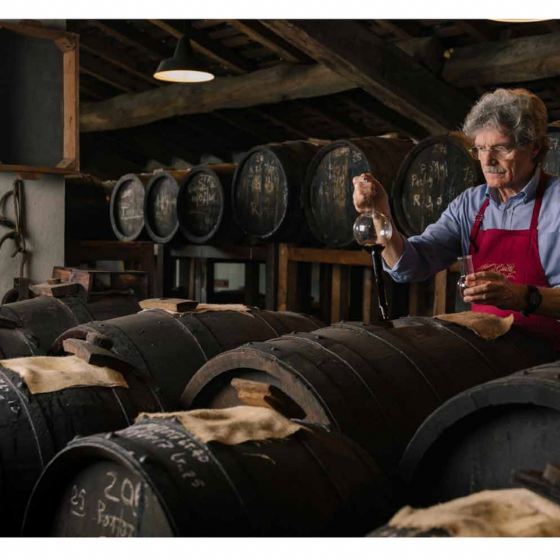
The Tasting Experience: Try This at Home
Want to taste olive oil the way the pros do? Grab a bottle of the good stuff and follow these steps:
- Prepare your palate: Clean a small glass with water (or eat a quick slice of green apple to neutralize your senses).
- Pour: Add about a tablespoon (15 ml) of olive oil to the glass.
- Warm it up: Hold the glass in the palm of one hand and cover the top with your other hand. Warm it gently for about a minute to release the aromas.
- Swirl: Gently swirl the oil so it coats the sides of the glass.
- Smell: Take short, deep breaths. Are you getting fresh green aromas? Herbal notes? Olive leaves?
- Taste (The “Strippaggio”): Take a small sip. Now, inhale short, successive breaths through your teeth. This spreads the oil throughout your mouth and throat.
- Evaluate: Notice the bitterness on your tongue, the peppery pungency in your throat, and how beautifully it all balances together.
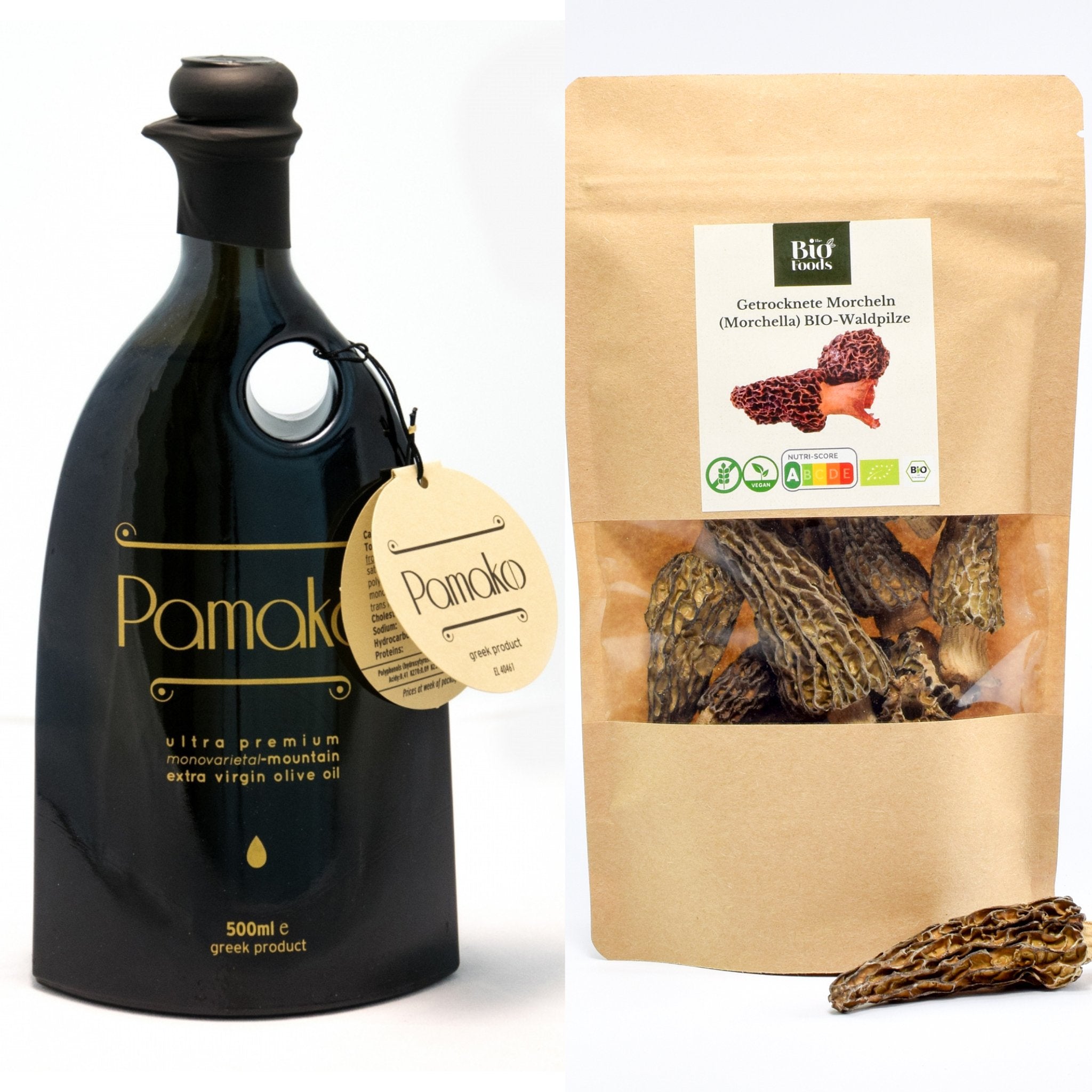
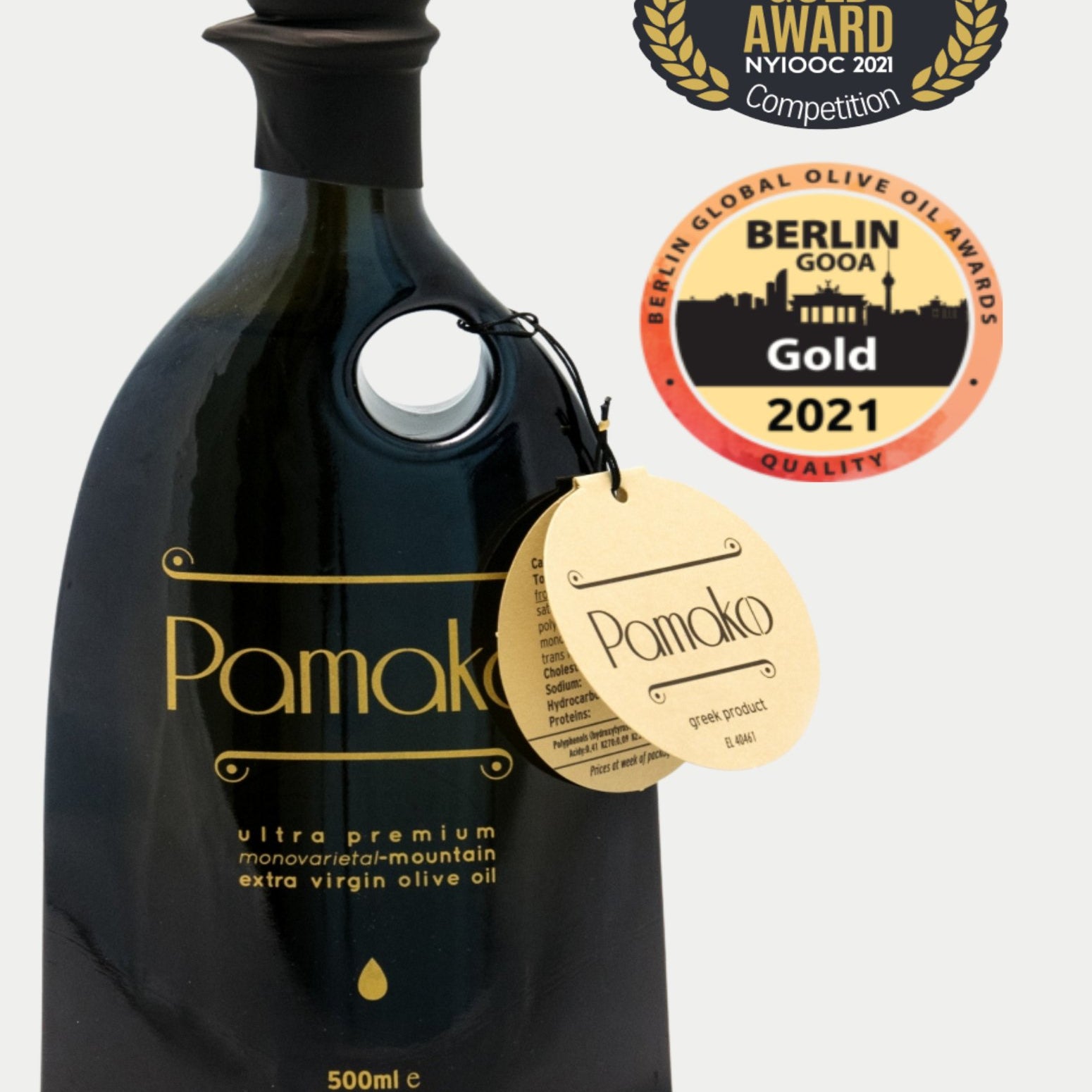
Why We Love Pamako Monovarietal Tsounati
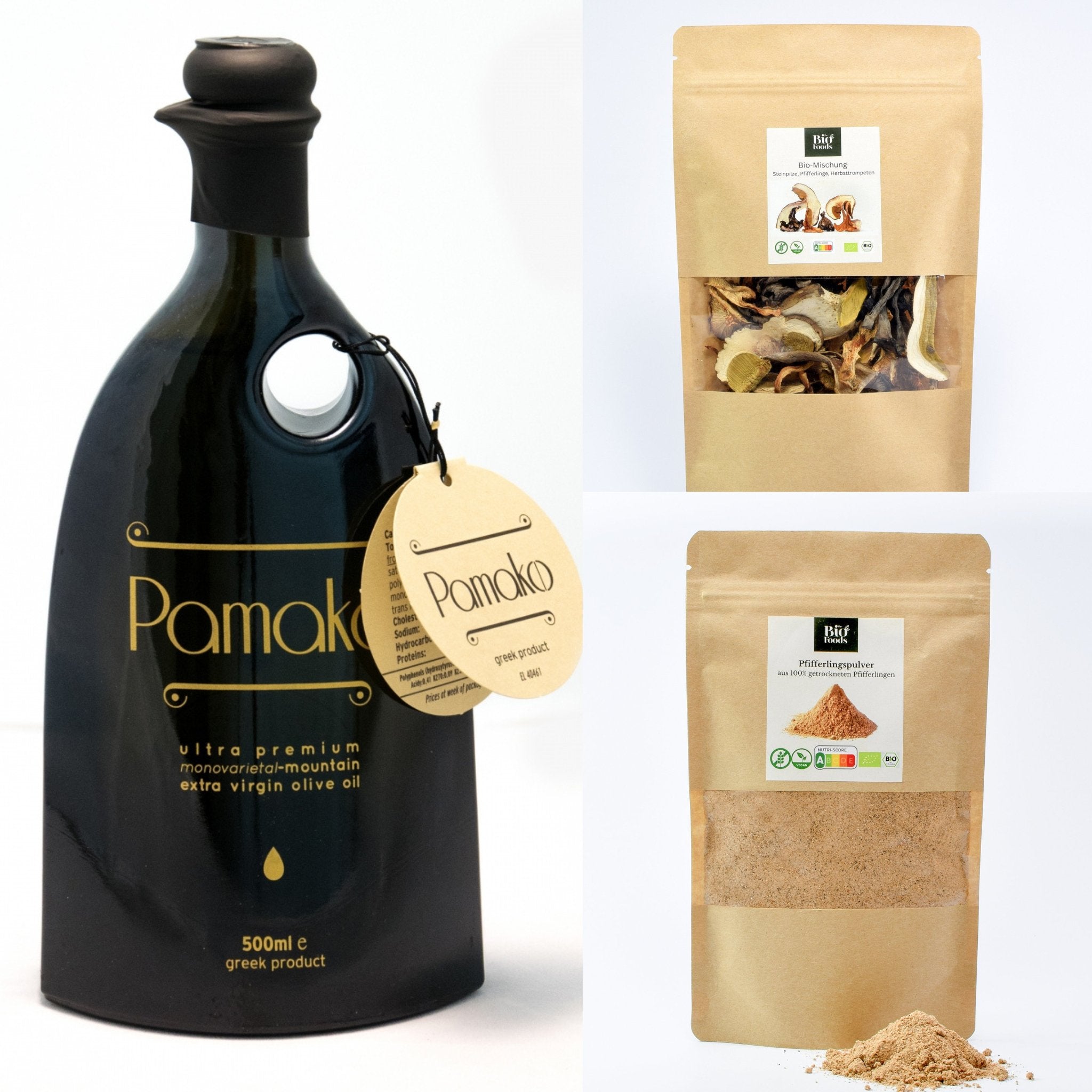
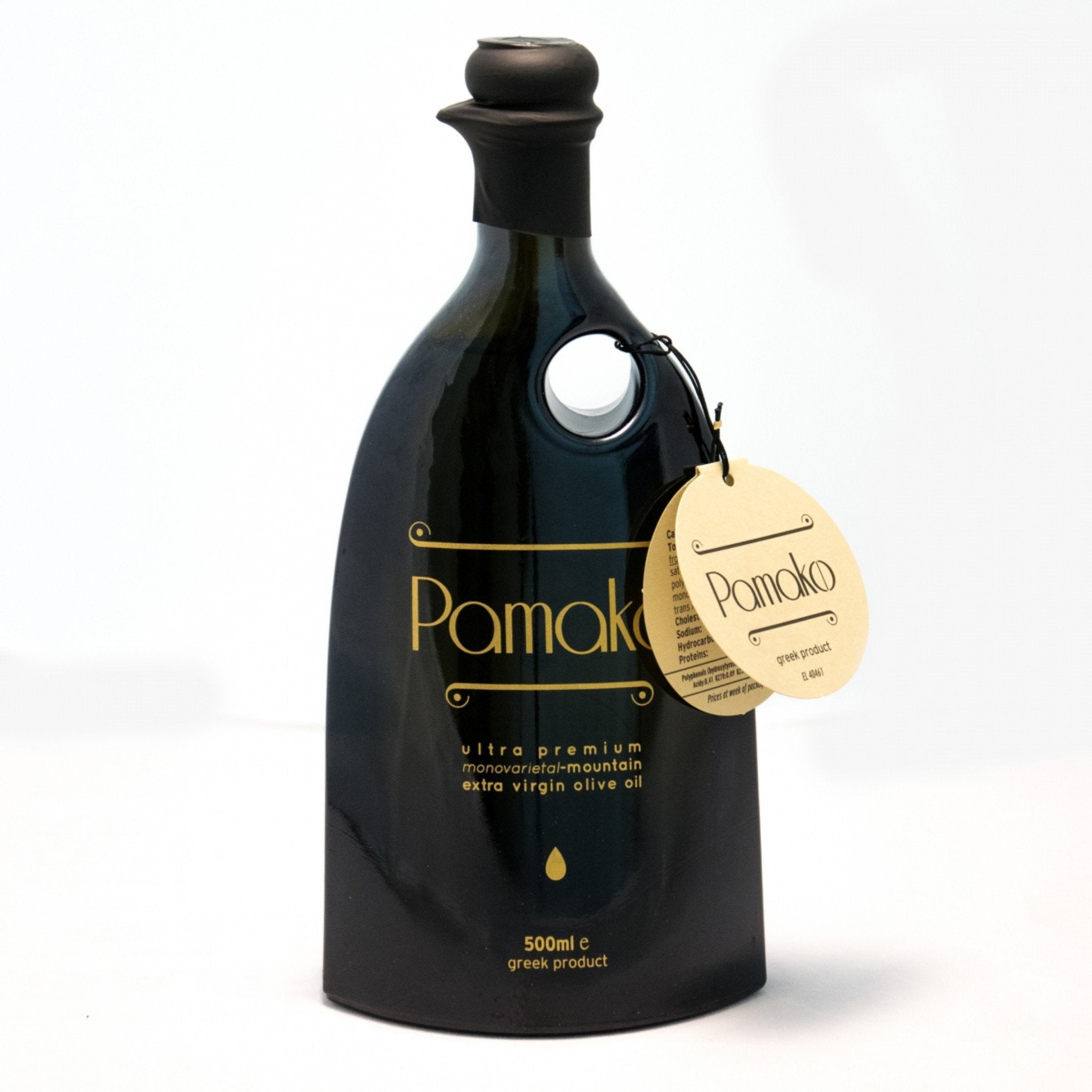
If you want to put this tasting method to the test, our Pamako Monovarietal is the perfect place to start.
Sourced from family-owned Greek groves, this 100% organic Tsounati oil is cold-extracted and bursting with notes of green olive leaf and fresh herbs. Because each batch is uniquely crafted by the season, it delivers a harmonious, medium-to-high intensity flavor that transforms any dish.
From our tasting experience at Biofach, we can say this with total confidence: when science confirms the quality and your senses confirm the harmony, that is when olive oil becomes truly exceptional. Pamako Monovarietal was one of the 6 EVOOs offered in a blind tasting, and comments about its taste echoed our sentiments of this outstanding product.